Showing posts with label Environment. Show all posts

Thursday, September 4, 2008

Wearble Motorcycle

In the US, cars are most often used for hauling (unfortunately) just one person. Though these cars have come a long way in efficiency, only about 4% of the energy consumed is used for hauling the passenger, while the machine uses 96% of the energy for hauling itself; about 3,500 lbs of metal and plastic for moving a 150-lb person!

Hopefully, machines like the following wearable motorcycle will give us the comfort of climate-controlled enclosure at a two-wheeler fuel efficiency, in the near future. It appears pretty neat, but looks like watching traffic in the rear will be a pain in the same:-)


While looking at this machine, got curious about the fuel efficiency of Jumbo Jets. On a quick and dirty back-of-the-envelope calculation, noticed that in spite of hauling large amounts of fuel, these air crafts are comparable* in efficiency to cars; about 8% of energy is used for hauling passengers, while 92% of energy is used for hauling the plane and fuel. Even though planes appear to be energy efficient (due lesser friction and thinner air, I imagine) when compared to cars, we need to factor-in the energy costs of maintaining airports and ground crew.

Quick estimates

Weight of Boeing 747-100: 395,000 lbs

Volume of Jet Fuel: 57,285 gals

Average specific gravity of jet fuel: 0.75

Weight of the fuel: 57,285 gals x 8.34 lbs/gallon (water) x 0.75 = about 358,000 lbs

Weight of passengers:
416 passengers x 140 lb/passenger = about 58,240 lbs

% of fuel used for hauling passengers: 58240/(358000+395000)= about 8%

Weight of luggage: 416 passengers x 50 lbs/passenger = 20,800 lbs (not included in calculation)

Thursday, June 5, 2008

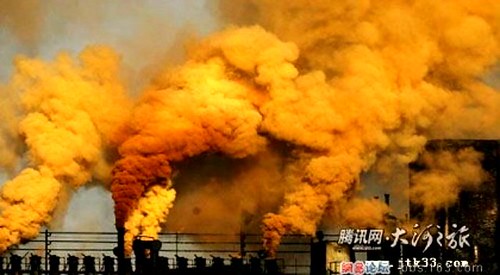
Pollution in China


According to this Wharton's article, China has passed the U.S. as the world's largest emitter of carbon dioxide. Sure, China should be concerned about pollution, as some other developing countries.

This information should raise an alarm in the US too. The US has about 1/4 th the population of China. So, when making comparisons, the US is expected not to have more than ~ 25% of the carbon emissions of China - both countries are about the same size. So, the time for reflection/introspection for the US was when its carbon emissions exceeded 25% of that of China. Also, a significant part of Chinese pollution is caused by producing goods (plastics) for consumption in the US - technically, they are emissions of the US, merely produced at a different location.

Thursday, May 8, 2008

Oxyhydrogen Automobiles


Mr. Teddy Cline claims that for $150, we can convert our cars into some sort of hybrids that run on gas and water, and save over 40% on fuel. If it works, this is not a bad deal at all - an average driver can save about $800 a year*. I came across several companies with similar claims.

Mr. Cline believes that most of the cars would be running on water by 2012**. What struck me the most was his 56-day 100% money back guarantee:-)


This is an odd ad, even though the number 56 is even! We typically see guarantees for 30 days, 90 days, one year, etc. - not for 28 days and 56 days. May be he is trying to make a point "why not?". If we (humans) are born with 7 fingers on each hand, we probably will be using a non-decimal numbering system now, and 10 would be an odd number for us. Or, may be his gizmo self destructs on day 57, 56% of the time! Here is a video about his HHO machine.


*My guesstimate - 15,000 miles/year, 27 miles/gallon, $3.70/gallon

**My buddy Raama must be thinking, "they better run on water, coz a good chunk of world will be under it by 2012 :-)"

Tuesday, October 16, 2007

Mottainai Grandma

Mottainai Grandma

One way to reduce greenhouse gas emissions is through conservation — living small and smart. Japan has a strong tradition of conservation, but it's also a country that likes the good life. And the good life requires electricity and lots of it.

Although a single hotel room in Japan can have four remote controls, a talking bath and heated toilet seats, a new popular children's book called Mottainai Grandma sends a different message about energy conservation.

Mottainai roughly translates as "Don't waste." In the drawings, Grandma looks a little stern with her hair up in a bun and cane in hand. And there's no avoiding her eyes. Mottainai is an old Buddhist word. Kawanishi says it also ties in with the Shinto idea that objects have souls.

"The whole idea that we are part of the nature, and should be in a very harmonious relationship with nature is very much a deep part of Japanese psychology," Kawanishi says.

In Japan, it's cool to be environmentally friendly. Many streets are lined with trash bins for recycling.

Wangari Maathai

There's also Wangari Maathai, winner of the Nobel Peace Prize. She's not Japanese, but rather, from Kenya, Africa. But she has become a kind of a celebrity in Japan, teaching the Japanese about their own word.

Sunday, August 12, 2007

Carrots for Vegetarianism

Fruits and Vegetables

Before talking about vegetariansim, I must say that I don't see anything wrong in eating meat. If a living thing tastes good, if you can run faster than it and catch it, I would say have fun eating it! I think killing a plant is no different than killing an animal. It is natural that carbon-based life forms depend on each other for nutrition and survival. However, I do believe that vegetarianism (or reducing our dependence on animal protein) is cheaper and is good for the planet.

In a world of $1 double cheeseburgers, it's no wonder that many people suspect that a vegetarian diet is more expensive than one that includes meat. But that's generally not true. And though it's difficult to tally the savings of illnesses or diseases avoided with a plant-based diet, the financial worth of good health is unquestionable. Vegetarianism could extend your life by several years, as well as lower your risk of heart disease, cancer and dementia. It's better for the planet, reducing water usage and global-warming gases.

A vegetarian diet uses considerably less water than a meat based diet. This is because to produce meat, water must be used in the production of feed for animals, which must be fed to the animals during their entire life. The loss of water (and energy) between trophic levels is very large. When the grains go directly to humans this inefficiency is avoided.

As an illustration, the water needed to produce a pound of wheat in the USA is 14 gallons whereas the water needed to produce a pound of beef is 441 gallons. More than half of the water use for all purposes in the USA is used for
livestock production. For reasons of inefficiency similar to that of water consumption, animal protein demands far greater expenditures of fossil fuel energy — eight times as much for a comparable amount of plant protein.

Petroleum is one of the resources freed up for other usage by a vegetarian diet: Within the Pulitzer-winning book by John Robbins, "Diet for a New America," which uses data primarily sourced from the world's largest body of scientists, AAAS, Robbins explains how the petroleum used in the transportation of farm-animals, the later processing of them, and the raising and harvesting of the vast amount of crops fed to farm-animals (which is much greater than the amount of crops people would need if we were to eat the crops directly, rather than feeding them to animals, then eating the animals), adds up to greatly increase the amount of petroleum used. So, if more people adopt a vegan diet, not only is more food available, but more petroleum to deliver that food is.

Thursday, August 2, 2007

Ethanol - Not Hale

Seattle PI

Drivers might save a few cents a gallon filling their tanks with ethanol, but they could soon be paying more for a burger and a milkshake as a result.

Demand for corn needed to make ethanol is soaring, and so are the prices, which have more than doubled within the past year.

That's bad news for beef and dairy producers, who also depend on the grain to feed their herds. Many say that cost will eventually be passed on to consumers and will likely mean higher grocery bills later this year.

Cattle feeders and producers aren't the only ones complaining about higher corn prices. Dairy farmers also are feeling the pinch.

"As more acres go into corn, it takes out other forages," Canton dairy farmer Scott Ortiz said.

U.S. farmers who once grew forage crops like alfalfa, milo or grain sorghum are switching to corn. That means fewer forage crops to feed dairy cows, said John Cowan, executive director of the Texas Association of Dairymen.

Milk prices are expected to continue to climb because of higher transportation costs and the increased corn demand.

J. Richard Fleming, the USDA's dairy market administrator in Dallas, said higher corn prices affect dairy farms in other ways, too.

"As the price of feed goes up, the higher cost of production has a tendency to decrease production of the farm," he said.

Tuesday, July 10, 2007

Bottled Water Hatao!

Aquafina

Is Bottled Water Better? - June 2007

Bottled water manufacturers’ marketing campaigns capitalize on isolated instances of contaminated public drinking water supplies by encouraging the perception that their products are purer and safer than tap water. But the reality is that tap water is actually held to more stringent quality standards than bottled water, and some brands of bottled water are just tap water in disguise. What’s more, our increasing consumption of bottled water—more than 22 gallons per U.S. citizen in 2004 according to the Earth Policy Institute—fuels an unsustainable industry that takes a heavy toll on the environment.

Environmental Impact

Fossil fuel consumption. Approximately 1.5 million barrels of oil—enough to run 100,000 cars for a whole year—are used to make plastic water bottles, while transporting these bottles burns thousands more gallons of oil. In addition, the burning of oil and other fossil fuels (which are also used to generate the energy that powers the manufacturing process) emits global warming pollution into the atmosphere.

Water consumption. The growth in bottled water production has increased water extraction in areas near bottling plants, leading to water shortages that affect nearby consumers and farmers. In addition to the millions of gallons of water used in the plastic-making process, two gallons of water are wasted in the purification process for every gallon that goes into the bottles.

Waste. Only about 10 percent of water bottles are recycled, leaving the rest in landfills where it takes thousands of years for the plastic to decompose.

The Simple (and Cheaper) Solution

The next time you feel thirsty, forgo the bottle and turn to the tap. You’ll not only lower your environmental impact but also save money—bottled water can cost up to 10,000 times more per gallon than tap water. And because the U.S. Environmental Protection Agency’s standards for tap water are more stringent than the Food and Drug Administration’s standards for bottled water, you’ll be drinking water that is just as safe as, or safer than, bottled.

If, however, you don’t like the taste of your tap water or are unsure of its quality, you can buy a filter pitcher or install an inexpensive faucet filter to remove trace chemicals and bacteria. If you will be away from home, fill a reusable bottle from your tap and refill it along the way; travel bottles with built-in filters are also available. Finally, limit your bottled water purchases for those times when you’re traveling in countries where water quality is questionable.

First plastic bags, now bottled water; San Francisco is certainly setting an example. Mayor Gavin Newsom signed an order this week banning the use of City funds to purchase single-serving bottled water.

Thursday, May 10, 2007

Ethanol - Good or Bad?

I recently attended theTCEQ's Environmental Trade Fair at Austin Convention Center during May 1-3, 2007. This annual event is Texas' premier environmental educational forum, considered by many to be one of the best in the country. There were some very interesting presentations including information on methods for recovery of uranium ore without mining!

In this huge convention center with acres of indoor space, green vehicles such as hybrids and compressed hydrogen-fueled cars were displayed. People have great things to say about ethanol as a fuel additive and as an alternative. However, I recently came across an article that says that ethanol is not as good as we think.

Ethanol promoter Ethanol.org says:
Ethanol is a high octane, clean burning, American-made renewable fuel. Its production and use offer a myriad of benefits to the United States and its citizens.

The production of ethanol is an economic engine for the United States, adding value to U.S. agricultural products and bringing billions of dollars to the nation's economy each year. The use of ethanol reduces harmful auto emissions, offers consumers a cost-effective choice at the pump, and decreases the amount of expensive crude oil needed to satisfy the nation's thirst for transportation fuel.
FlyRod and Reel* says that ethanol does more harm than good

It all started in 1990 with amendments to the Clean Air Act, revolutionary in that they regulated not just how we burn gasoline but how we make it. In areas out of compliance with air-pollution standards, gasoline had to include at least two percent oxygen-containing chemicals (oxygenates), the better to combust carbon monoxide, toxic hydrocarbons, and smog-producing volatile organic compounds. There were only two choices--ethanol and the petroleum-based methyl tertiary butyl ether (MTBE). This was precisely what the cornbelt had fantasized about and lobbied for. Suddenly the moribund ethanol industry had a future. City air would become breathable. We'd have plenty of fuel. It was going to be a win-win-win.

But instead of cleaning up America, ethanol has added to the mess we're making out of our water and air. Now the Bush Administration has decreed that ethanol replace the far more efficient MTBE as an oxygenate. But with current refining technologies and anti-pollution paraphernalia on motor vehicles there's no need for any oxygenate, a fact the powerful agribusiness lobby doesn't want you to know. Under its withering pressure, Congress and the executive branch have committed the nation to ethanol as both oxygenate and fuel.

The Energy Policy Act of 2005 requires that US gasoline contain 7.5 billion gallons of ethanol by 2012, up from 4 billion. One hundred and one ethanol plants are online, and 44 are under construction. Eighty million US acres were planted to corn in 2006; and the ethanol boom will require 10 million more just in 2007. Ethanol, we are being told, is going to "reduce our dependence on foreign oil" and "lead us to energy independence." "Live Green, Go Yellow," effuses General Motors, one of the major roadblocks to fuel-efficiency standards. "Fill Up, Feel Good," gushes the Ethanol Promotion and Information Council, a front for agribusiness.

How will ethanol affect your fishing, apart from possibly ruining your outboard motor? (Ethanol does this in lots of ways. Just ask David Blinken, the famous Montauk fly-fishing guide, who recen-tly spent $25,000 pulling his deck, replacing his fuel lines and tank, extracting aluminum-oxide gum from his carburetors and basically rebuilding his twin 100-horse Yamahas.) First, no crop grown in the United States consumes and pollutes more water than corn. No method of agriculture uses more insecticides, more herbicides, more nitrogen fertilizer. Needed for the production of one gallon of ethanol are 1,700 gallons of water, mostly in the form of irrigation taken from streams either directly or by snatching the water table out from underneath them. And each gallon of ethanol produces 12 gallons of sewage-like effluent.

Ethanol plants are gross polluters of air and water, and because of the exorbitant price of natural gas some of the new ones will be coal-fired, adding to the already dangerous mercury content of fish. The response of the Bush administration has been a proposal to relax pollution standards for ethanol production. Under the conservation programs of the 1985 Farm Bill and its successors, some farmers are bootstrapping their way toward sustainable agriculture, but corn production still erodes topsoil about 10 times faster than it can accrete.

The toxic, oxygen-swilling stew of nitrates, chemical poisons and dirt excreted from the corn monocultures of our Midwest pollutes the Mississippi River and its tributaries, limiting fish all the way to the Gulf where it creates a bacteria-infested, algae-clogged, anaerobic "Dead Zone" lethal to fish, crustaceans, mollusks and virtually all gill breathers. In some years, depending on seasonal heat and water conditions, the Dead Zone can cover 8,000 square miles. And it's expanding.

No habitat is more important to fish and wildlife than wetlands. They filter out pesticides and sediments, and they consume phosphates and nitrates. At least 70 percent of the wetlands in the cornbelt have already been lost. But, in order to produce surplus corn for ethanol, remaining cornbelt wetlands are being drained. In some areas--Nebraska, for instance--corn has to be irrigated by pumps that suck water from the ground faster than it percolates back in. Both pumps and the ethanol plants themselves are powered by natural gas, the frenzied production of which is creating horrendous problems for fish and wildlife in the West.

Pimentel reports that ethanol, which yields only two-thirds the energy of gasoline, gets 45 times more federal subsidy per gallon than gasoline. "That's what's attracting all the flies," he says. All told, you and I are spending at least $3 per gallon on ethanol subsidies for a total of $6 billion per year. Without all this gravy train, Pimentel has calculated that the cost for 1.33 gallons of ethanol (the equivalent in energy yield to a gallon of gasoline) would be $7.12.

We do, however, possess the technology to build fuel-efficient automobiles. In the current charade designed by and for agribusiness we're allocating 18 percent of the corn we grow to ethanol, thereby cutting our petroleum consumption by one percent. But Patzek has calculated that if we doubled automobile fuel efficiency, we'd cut petroleum consumption by 33 percent or, put another way, we'd increase our petroleum supply by a third. It's a revolutionary concept that America has never tried. Fish-and-wildlife advocates are calling it conservation.

* I don't read this magazine. I don't even know of its existence until I came across this article. My colleague Dean, a professional bass fisherman, forwarded me this link.

Thursday, May 3, 2007

Tips for Minimizing Our Ecological Foot Prints

Here are some EcoTips to minimize our ecological foot print. Beginning to make a positive difference in a small way would change our attitude, and this attitude will become a habit through repetition.
Simplify your life as much as possible. Only keep belongings that you use/enjoy on a regular basis. By making the effort to reduce what you own, you will naturally purchase less/create less waste in the future. For information on voluntary simplicity, check out Voluntary Simplicity Web Resources. Learn more through books on voluntary simplicity.

In general, think before you buy any product - do you really need it? How did the production of this product impact the environment and what further impacts will there be with the disposal of the product (and associated packaging materials)? When you are thinking about buying something, try the 30-Day Rule -- wait 30 days after the first time you decide you want a product to really make your decision. This will eliminate impulse buying.

For ideas on how to reduce junk mail, access:
Reduce Personal and Business Junk Mail
Do-it-yourself: Stop junk mail, email and phone calls
How to Get Rid of Junk Mail, Spam, and Telemarketers
Junkbusters
Opt-Out

Use both sides of each piece of paper -- for note taking or printing documents from your computer (at home or work). Create note pads by stapling together once-used paper.

Purchase rechargeable batteries and a battery recharger (some battery rechargers will also recharge regular alkaline batteries).

Switching to a vegetarian diet is a powerful way to help protect our environment. The United Nations recently released
Livestock’s Long Shadow–Environmental Issues and Options, which concludes that the livestock sector (primarily cows, chickens, and pigs) emerges as one of the top two or three most significant contributors to our most serious environmental problems, at every scale from local to global. It is one of the largest sources of greenhouse gases - responsible for 18% of the world’s greenhouse gas emissions as measured in CO2 equivalents. By comparison, all transportation emits 13.5% of the CO2. It produces 65% of human-related nitrous oxide (which has 296 times the global warming potential of CO2) and 37% of all human-induced methane (which is 23 times as warming as CO2). It also generates 64% of the ammonia, which contributes to acid rain and acidification of ecosystems. Buying organic, locally grown food also reduces global warming emissions.

Paint your home a light color if you live in a warm climate and a dark color if you live in a cold climate.

When turning on a water faucet, unless you need warm water choose the coolest water setting.

Each time you turn on a water faucet use the lowest pressure necessary. Keep the water turned on only while it is needed.

Always run full loads of laundry and dishes. Choose the short cycle at low water levels whenever possible.

Learn about the top plants for removing toxics from the air in your home in the article:
Using Plants to Clean Indoor Air Pollutants.

Consider switching to online news. If you enjoy reading newspapers and/or magazines offline better, consider reading them at a local library. If they don't carry a newspaper or magazine you like, find out if you can buy a subscription for the library (this is a great way to introduce sustainable/environmental magazines to people in your community).

Offer/ask for gifts that don't involve buying anything. For example, time together, a back rub, babysitting, offer to teach something you know how to do (e.g., making candles), donation to charity, seeds from your garden, tickets to an event (musical, lecture series, play, concert, etc.), gift certificates for
spas, music downloads, movie downloads, etc. For more ideas, read 25 Great, Consumer-Less Gift Ideas.

Never release balloons outdoors. They frequently find their way to open water (even from 100's of miles away) and can harm or kill turtles, whales, and other marine mammals.
Finally,
an example of the spirit of conservation:

America's entry into World War II prompted a ban on sliced bread starting in January 1943. The ban was intended to reduce wastage, possibly on the theory that sliced bread goes stale faster than unsliced. Alternatively, the ban may have been to conserve the metal parts needed to repair slicing machines for war use.